

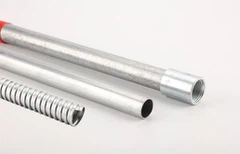

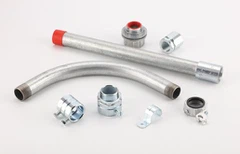
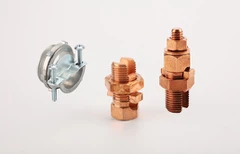

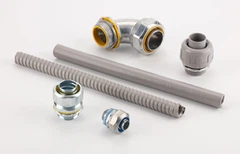
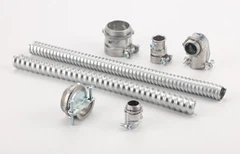


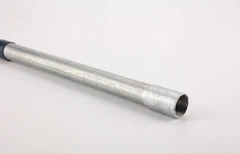
Flexible metal conduit is widely used in the petrochemical industry, but there are also problems in the application, mainly due to the choice of hose length and improper installation. If the length of the hose is too long, it will cause instability of the system, increase fluid resistance, increase mechanical damage and vibration. If the length of the hose is too short, it will not achieve the purpose of compensation, vibration reduction and noise cancellation. Therefore, determining the length of the metal hose is a top priority. In addition, the following factors should be considered: the nature of the medium, operating temperature, operating pressure, nominal diameter of the connecting pipe, site type, connection method, displacement mode, etc.
Installation type
The correct installation of the flexible metal conduit is an important part of ensuring that its performance is fully utilized. The flexible metal conduit is usually installed after the root valve of the tank inlet and outlet. The flexible metal conduit also has a valve to make the tank and the pipeline directly form a soft connection for the inspection and replacement of the flexible metal conduit. Flexible metal conduit has limited axial displacement capability under natural conditions. When the installation length is equal to the natural length, it must not withstand strong axial stretching and breakage, resulting in pipeline leakage. Therefore, the installation length of the metal hose is less than the natural length to ensure a certain degree of freedom.
Installation precautions
(1) The flexible metal conduit must be inspected before installation, and the problem is found to be eliminated in time;
(2) During the hoisting process, measures should be taken to prevent damage to the metal hose;
(3) Short-circuit pipes should be installed after the metal hose to compensate for the deviation of the hose gap size;
Our company also has Liquid Tight Conduit for sale, welcome to consult.


